How I scale design orgs, not just screens.
A throughline across five companies — coming in as they outgrow their scrappy foundations, and turning fragmented design into scalable systems and smoother teams.
- Role
- Design systems & operations lead
- Team
- Multiple design & engineering teams
- Timeframe
- 2016 — present
- Platform
- Web · Mobile

The pattern
I tend to join companies at the same inflection point: established, with a real product and a decent foundation — but growing fast and still working scrappy. They're outgrowing their platform, or they don't yet have a solid design team and structure. Across Trove, Lendi, Shootsta, Mindbody, and Medely, that's the moment I come in and build the systems and ways of working that let the org scale.
Streamlining how teams work
A lot of the leverage is operational. I reduce friction between teams, tighten the design-to-engineering handoff so fewer things break in the build, and create templates and guidelines that make scoping and expectations clear for cross-functional partners. I also clear out the waste — unused design systems and outdated components — and replace it with one clean, usable system, which cuts inconsistency and smooths how design and engineering work together. I've run that consolidation repeatedly: four fragmented libraries into one at Lendi and Mindbody, and three into one at Medely.
Raising the bar on the design language
I raise the overall visual design language of the system, with a deliberate focus on accessibility and following proper industry standards and guidelines — so the foundation isn't just consistent, but correct.
Architecture for scale
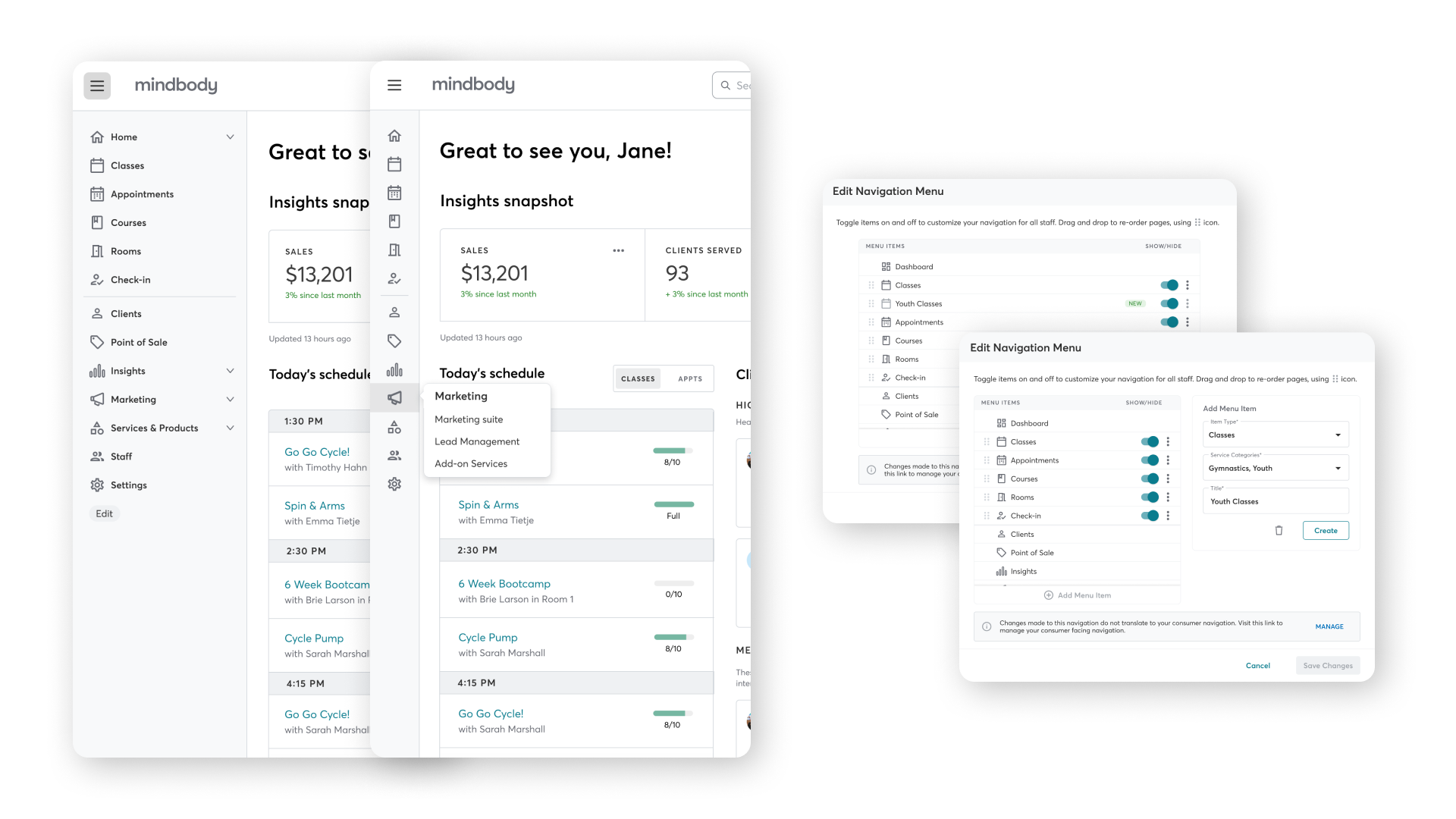
At Mindbody and Medely I went further, defining new platform architecture and navigation so the product could scale with the business rather than buckle under it.