Rebuilding trust in scheduling at scale.
How a fragmented booking experience became one calm system for tens of thousands of wellness businesses.
- Role
- Lead Product Designer
- Team
- Small cross-functional team
- Timeframe
- Multi-month
- Platform
- Web

The problem worth solving
Business owners spent 70–80% of their day just organizing appointments. The brief said "redesign the calendar." The real problem was that scheduling had grown across a decade of disconnected surfaces, and no one owned it as a system.
What I owned
As lead designer I documented a decade of legacy complexity, set the product direction, and made the core bet: unify everything around a single flyout model rather than patch four screens.
Approach & key decisions
I explored three intake patterns — inline, overlay flyout, and full-screen modal — and chose the flyout for contextual, multi-tasking-friendly editing.
Outcome — the plot twist
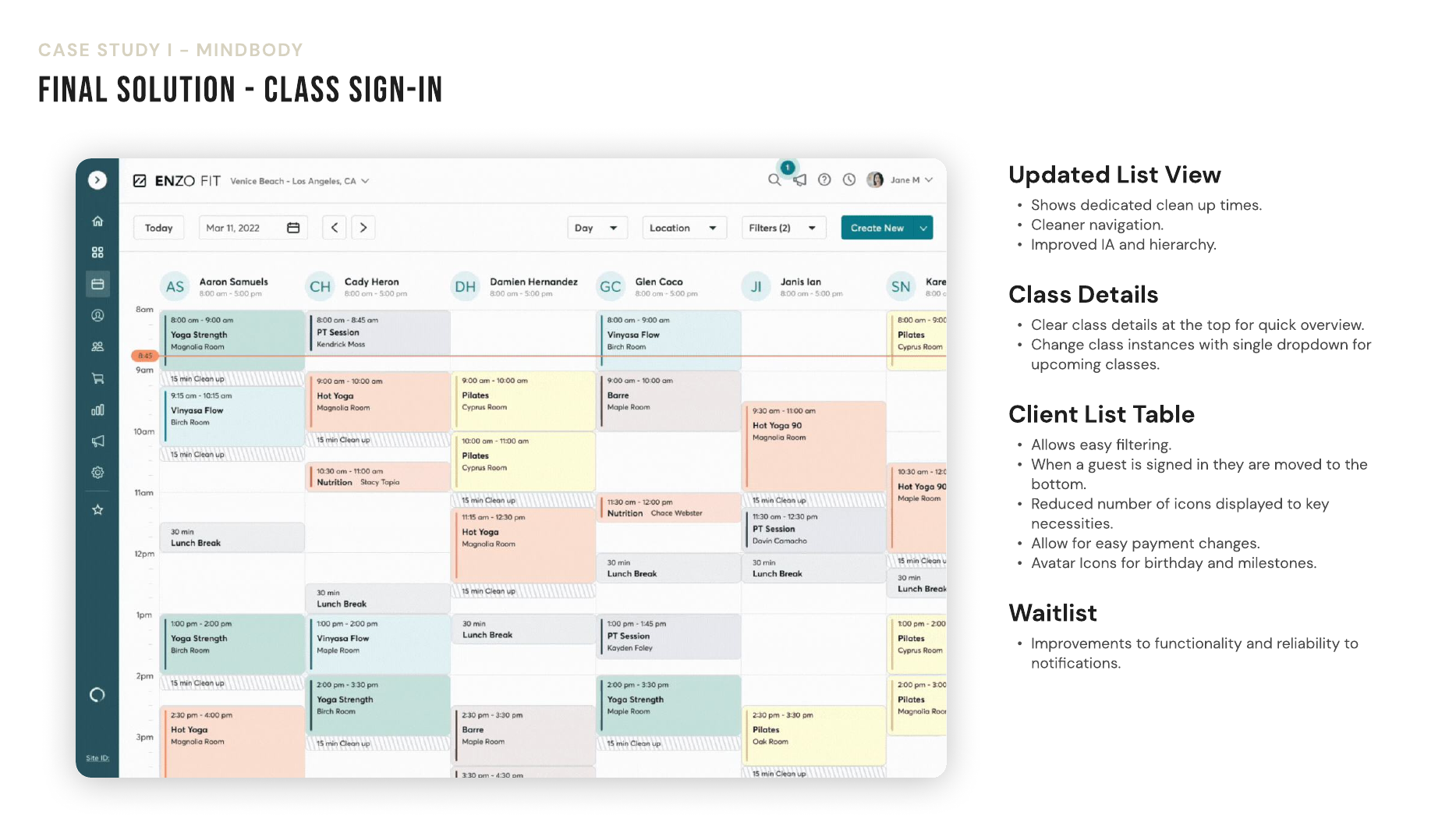
Resourcing and complexity forced a hard scope cut. Rather than hold out for the big-bang vision, I shifted to shipping the highest-value slice first — the Class Sign-in panel and notification improvements — to de-risk delivery.
What I'd carry forward
Owners didn't train staff despite notice; 68% wanted more real estate than the first panel gave. The lesson I carry: ship incrementally, plan for rollout reality, and always have a backup plan.
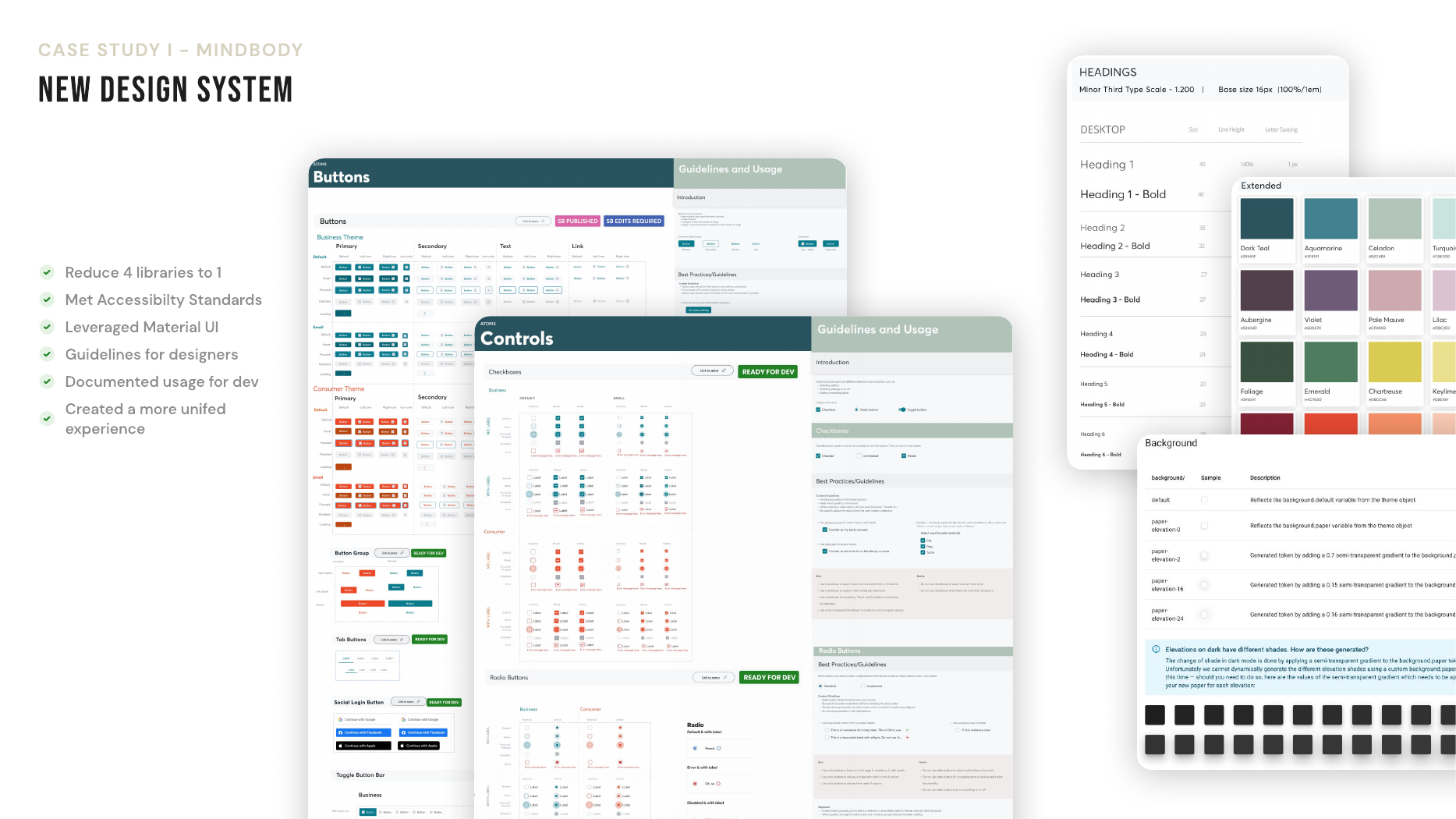
Alongside the scheduling work, I led the new design system that grew out of it — one component library replacing four, built to carry this pattern language across the rest of the product.
Beyond the brief
Self-initiated · in parallel- New design system · Led
- Navigation 1.0 → 2.0 · Ledrestructured primary nav across the product
- Ways of working · Drovealigned design + eng on one source of truth